
Uncategorized
Uncategorized
Difference Between SEO and GEO
SEO vs GEO: Understanding the Future of Digital Visibility This blog is explaining about “Difference between SEO&GEO” Businesses need to modify their digital marketing tactics as artificial intelligence changes how people look for information online. Traditional Search Engine Optimization (SEO) has long been the foundation of online visibility, helping websites rank higher on search engines like Google and Bing. Today, a new approach called Generative Engine Optimization (GEO) is becoming increasingly important as AI-powered search tools such as ChatGPT, Google AI Overviews, Gemini, and Perplexity change the way users discover information. Businesses that wish to remain competitive in the rapidly changing digital landscape must comprehend the distinction between SEO and GEO. What is SEO? Search Engine Optimization (SEO) is the process of improving a website so that it ranks higher in search engine results pages (SERPs). The primary goal of SEO is to attract organic traffic by making your website more relevant and trustworthy for specific search queries. SEO involves several important practices, including: Keyword research and optimization High-quality content creation Technical website optimization Mobile-friendly website design Fast page loading speed Internal and external link building Local SEO optimization User experience improvements What is GEO? Generative Engine Optimization (GEO) is the practice of optimizing your content so that AI-powered search engines and generative AI platforms use your information when generating answers for users. Unlike traditional search engines that provide a list of links, AI search tools generate direct answers by analyzing multiple trusted sources. GEO focuses on making your content accurate, well-structured, authoritative, and easy for AI systems to understand. Popular AI platforms include: ChatGPT Google AI Overviews Google Gemini Microsoft Copilot Perplexity AI Key Differences Between SEO and GEO Feature SEO GEO Goal Rank higher on search engines Be referenced by AI-generated answers Platform Google, Bing, Yahoo ChatGPT, Gemini, Perplexity, AI Overviews Focus Keywords and rankings Context, authority, and trustworthy content Results Website links AI-generated summaries and citations Content Style Keyword-optimized pages Comprehensive, structured, conversational content Success Metric Organic traffic AI visibility, mentions, and citations SEO and GEO Work Together Many people believe GEO will replace SEO. In actuality, the two approaches work well together SEO helps search engines discover and rank your website, while GEO helps AI systems understand and reference your content. Businesses that combine both approaches have a better chance of reaching users through both traditional search and AI-powered experiences. For the best results: Create original, valuable content. Use clear headings and logical structure. Answer common user questions. Support claims with reliable information. Update content regularly. Improve page speed and user experience. Build authority through quality backlinks and expertise. Why GEO matters in 2026 User search behavior is changing rapidly. Instead of browsing multiple websites, many users now ask AI assistants for direct answers. For example, instead of searching: *”Best SEO tips for beginners”* Users may ask: *”How can I improve my website ranking without paying for ads?”* AI tools generate a detailed response using information from trusted websites. If your content is optimized for GEO, your website has a better chance of being referenced in those responses, increasing your brand visibility and authority. Best Practices for SEO & GEO To succeed in both traditional and AI search, follow these best practices: Publish helpful, original, and accurate content. Write naturally while addressing user intent. Use descriptive headings and subheadings. Include FAQs that answer common questions. Add structured data where appropriate. Keep information up to date. Demonstrate expertise and credibility. Optimize website performance and mobile usability. Conclusion SEO and GEO are not competing strategies—they are complementary. SEO ensures your website ranks well in search engine results, while GEO increases the likelihood that AI-powered search tools will reference your content in generated answers. As AI continues to reshape online search, businesses that invest in both SEO and GEO will be better positioned to attract traffic, build authority, and stay ahead of the competition. The future of digital marketing belongs to brands that optimize for both search engines and generative AI, ensuring their content remains visible wherever users seek information.
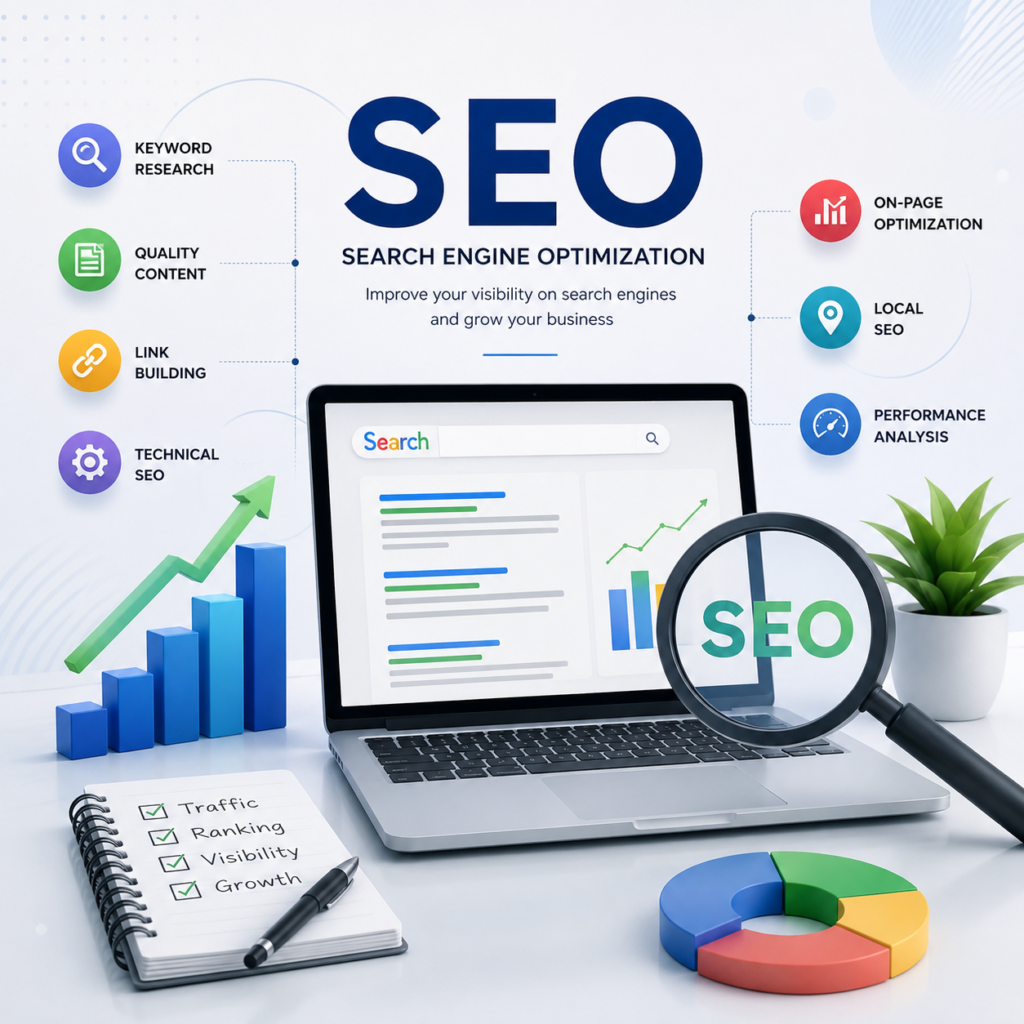
What is SEO?
Search Engine Optimization (SEO) Search Engine Optimization (SEO) is the process of improving your website so it appears higher in search engine results like Google, Bing, and Yahoo. The goal of SEO is to increase your website’s visibility, attract qualified visitors, and generate more leads or sales without paying for ads.A well-optimized website helps search engines understand your content while providing users with a better browsing experience. Whether you’re a local business, an e-commerce store, or a personal brand, SEO is one of the most effective long-term digital marketing strategies. Why is SEO Important? Increases organic (free) website trafficImproves your Google search rankingsBuilds trust and credibility with your audienceEnhances user experience and website performanceGenerates high-quality leads and conversionsDelivers long-term marketing results with a strong ROI Types of SEO On-Page SEO Optimizing website content, headings, keywords, meta titles, and images. Off-Page SEO Building backlinks, increasing brand mentions, and improving domain authority. Technical SEO Improving website speed, mobile responsiveness, site structure, crawlability, and security. Local SEO Optimizing your business to appear in local search results and Google Maps. How SEO Works 1. Keyword Research – Find what your audience is searching for.2. Content Creation – Publish valuable and relevant content.3. Website Optimization – Improve page structure, speed, and mobile usability.4. Link Building – Earn quality backlinks from trusted websites.5. Performance Monitoring – Track rankings, traffic, and continuously improve. Benefits of SEO Higher search engine visibilityIncreased website trafficBetter brand awarenessMore qualified leadsHigher conversion ratesSustainable business growth Final Thoughts SEO is more than just ranking on Google—it’s about connecting your business with the right audience at the right time. With a well-planned SEO strategy, you can build a strong online presence, drive consistent traffic, and achieve long-term digital success.

How to Set Up a Ad
How to Set Up a Meta (Facebook & Instagram) Ad: A Step-by-Step Guide Meta Ads (Facebook and Instagram Ads) are among the most powerful digital marketing tools for reaching your ideal audience. Whether your goal is to increase website traffic, generate leads, boost sales, or build brand awareness, a well-structured ad campaign can deliver measurable results In this guide, you’ll learn how to create a Meta ad campaign from start to finish using Meta Ads Manager. Step 1: Create a Meta Business Account Before running ads, you’ll need:A Facebook accountA Facebook Business PageAn Instagram Business Account (optional but recommended)A Meta Business Portfolio (formerly Business Manager)These allow you to manage your pages, ad accounts, team members, and payment methods in one place. Step 2: Open Meta Ads Manager Log in to Meta Ads Manager and click Create to start a new campaign.Meta Ads Manager is divided into three levels:Campaign – Choose your marketing objective.Ad Set – Define your audience, budget, schedule, and placements.Ad – Design your advertisement. Step 3: Choose Your Campaign Objective Select the objective that matches your business goal.Common objectives include: Awareness Increase brand recognition and reach more people. Traffic Drive visitors to your website, app, or landing page. Engagement Get more likes, comments, shares, and messages. Leads Collect customer information using instant forms or website forms. App Promotion Encourage people to install your mobile app. Sales Increase online purchases or conversions. Step 4: Name Your Campaign Give our campaign a clear name.Example:Summer Sale | Website Traffic | July 2026A consistent naming structure makes campaigns easier to manage. Step 5: Set Your Campaign Budget Choose between: Daily Budget Meta spends approximately the same amount each day.Example:₹500/day Lifetime Budget Set a total amount for the campaign duration.Example:₹10,000 for 20 days Step 6: Define Your Target Audience Audience targeting is one of the biggest strengths of Meta Ads.You can target people based on:AgeGenderLocationLanguageInterestsBehaviorsEducationJob titlesCustom AudiencesLookalike AudiencesExample:Age: 22–40Location: KeralaInterests: Digital Marketing, Business, Entrepreneurship Step 7: Choose Ad Placements Advantage+ Placements (Recommended) Meta automatically chooses where to show your ads Manual Placements Choose specific placements such as:Facebook FeedInstagram FeedInstagram StoriesFacebook StoriesReelsMessengerAudience NetworkFor beginners, Advantage+ Placements are usually the best option. Step 8: Set Your Campaign Schedule Choose:Start DateEnd Date (optional)You can also schedule ads to run during specific hours if needed. Step 9: Create Your Ad Now it’s time to design your advertisement.Choose your format:Single ImageVideoCarouselCollectionThen add: Primary Text Write compelling copy that highlights the problem, solution, and value Headline Create a short, attention-grabbing title. Description Add extra information if needed. Call-to-Action (CTA) Examples:Learn MoreShop NowSign UpContact UsBook NowDownload Step 10: Add Your Website or Landing Page Insert the destination URL where users will go after clicking your ad.Ensure the landing page:Loads quicklyMatches the ad messageIs mobile-friendlyIncludes a clear CTA Step 11: Preview Your Ad Before publishing, review how your ad appears on:FacebookFeedInstagram FeedStoriesReelsMobile devicesDesktopCheck for spelling errors, image quality, and CTA accuracy. Step 12: Publish Your Campaign Click Publish. Monitor Your Campaign Once your campaign is live, track important metrics such as:ReachImpressionsClicksClick-Through Rate (CTR)Cost Per Click (CPC)Cost Per Lead (CPL)ConversionsReturn on Ad Spend (ROAS) Tips for Better Results Use high-quality images or videos.Write clear, benefit-focused ad copy.Include a strong call-to-action.Test multiple creatives and audiences.Install the Meta Pixel for conversion tracking.Avoid making major edits while the learning phase is active.Analyze results regularly and scale successful campaigns. Common Mistakes to Avoid Targeting an audience that’s too broad.Using low-quality visuals.Sending traffic to a poor landing page.Ignoring campaign analytics.Running only one ad variation.Setting unrealistic budgets or expectations.
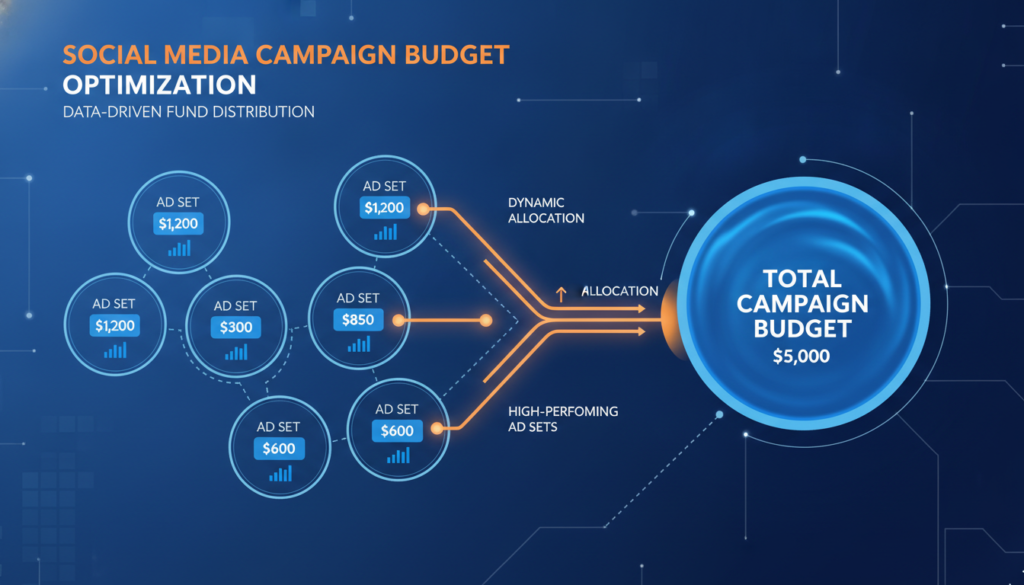
ABO vs CBO in Social Media Marketing
Which One Should You Choose? Running Facebook and Instagram ads is one of the most effective ways to reach your target audience. But before launching a campaign, you’ll encounter an important choice: ABO (Ad Set Budget Optimization) or CBO (Campaign Budget Optimization).Understanding the difference between these two budget strategies can help you spend your advertising budget more efficiently and improve your campaign performance. What is ABO (Ad Set Budget Optimization)? ABO allows you to set a separate budget for each ad set within a campaign. This means you decide exactly how much money each audience receives. Example Campaign: Summer SaleAd Set 1: Women (₹500/day)Ad Set 2: Men (₹500/day)Ad Set 3: Students (₹500/day) Advantages of ABO ✔ Full control over each audience’s budget✔ Ideal for testing different audiences✔ Easy to compare audience performance✔ Great for beginners learning Meta Ads Disadvantages Requires regular monitoring and optimization.High-performing ad sets cannot automatically receive more budget.Can be less efficient for large-scale campaigns. What is CBO (Campaign Budget Optimization)? CBO lets you set one total budget at the campaign level. Meta’s algorithm automatically distributes the budget to the best-performing ad sets. Example Campaign Budget: ₹1,500/dayMeta automatically allocates more budget to the audience generating the best results.For example:Women → ₹300Men → ₹900Students → ₹300The distribution changes dynamically based on performance. Advantages of CBO ✔ Uses AI to optimize spending✔ Saves time with automatic budget allocation✔ Maximizes campaign performance✔ Excellent for scaling successful campaigns✔ Better return on ad spend (ROAS) in many cases Disadvantages Less control over individual ad set budgetsSmaller audiences may receive little or no budgetCan make audience testing more difficult ABO vs CBO Comparison Feature ABO CBO Budget Level Ad Set Campaign Budget Allocation Manual Automatic Control High Moderate AI Optimization Limited Advanced Best For Audience Testing Campaign Scaling Beginner Friendly Yes Yes, after testing When Should You Use ABO? Choose ABO when:Testing new audiencesComparing creativesLaunching a new campaignWorking with a small budgetWanting full budget control When Should You Use CBO? Choose CBO when:You already know your winning audienceScaling campaignsRunning multiple ad setsWanting Meta to optimize spending automaticallyMaximizing conversions and ROAS Practical Strategy Many experienced marketers use both strategies:Step 1: Start with ABO to test audiences, creatives, and placements.Step 2: Identify the best-performing combinations.Step 3: Move those winning ad sets into a CBO campaign to scale efficiently.This testing-to-scaling approach combines the control of ABO with the automation of CBO. Final Thoughts There isn’t a one-size-fits-all winner.ABO gives you more control and is ideal for testing.CBO leverages Meta’s machine learning to optimize budget allocation and is ideal for scaling campaigns.
SEO v/s SMM
SEO and SMM: The Perfect Digital Marketing Combination SEO helps people find you on search engines, while SMM helps people discover and connect with your brand on social media. Together, they create a powerful and well-rounded digital marketing strategy. Which One Is Better? Choose SEO if you want to: Rank on Google Generate long-term organic traffic Increase website visibility Attract users with high purchase intentChoose SMM if you want to: Build brand awareness Engage with your audience Grow followers and community Promote products, services, or events quickly Best Strategy: Combine SEO + SMM The most successful digital marketing strategies use both: Write an SEO-optimized blog to attract Google visitors. Share the blog on Instagram, Facebook, LinkedIn, and X to reach a wider audience. Turn key points into Reels, carousel posts, or short videos. Use social media to drive traffic back to your website, where SEO helps convert visitors into customers. Key Differences Between SEO and SMM SEO(Search Engine Optimization) SMM(Social Media Marketing) Focuses on improving website rankings in search engines. Focuses on promoting brands through social media platforms. Drives organic traffic from search engines like Google. Drives traffic and engagement from social media channels. Long-term strategy with lasting results. Short-term strategy with immediate audience reach. Results typically take weeks or months. Results can be seen within hours or days. Builds website authority and credibility. Builds brand awareness and customer relationships. Measures success through rankings, organic traffic, and conversions. Measures success through reach, engagement, followers, and clicks What is SEO? Search Engine Optimization (SEO) is the process of optimizing a website to improve its ranking on search engines like Google. By using the right keywords, creating high-quality content, improving website performance, and building backlinks, SEO helps attract organic traffic and generate long-term results. Benefits of SEO Increases organic website trafficImproves search engine rankingsBuilds brand credibility and trustGenerates high-quality leadsDelivers long-term, sustainable growth What is SMM? Social Media Marketing (SMM) is the practice of promoting a business through platforms such as Facebook, Instagram, LinkedIn, X, and YouTube. It involves creating engaging content, running paid advertising campaigns, interacting with followers, and building a strong online community. Benefits of SMM Boosts brand awarenessIncreases audience engagementDrives traffic to websitesPromotes products and services quicklyStrengthens customer relationships Why Use Both? Using SEO and SMM together creates a powerful digital marketing strategy. SEO attracts users who are actively searching for your products or services, while SMM keeps your audience engaged and encourages them to share your content. Together, they improve brand visibility, generate quality leads, and increase conversions.